


Is AuraLux Safe for Darker Skin Tones? Here’s the Actual Science
For a long time, the honest answer to “can I get laser treatment on my skin?” depended heavily on how much melanin you had. If you have a deeper skin tone, there’s a good chance a dermatologist, an aesthetician, or even a friend has told you laser wasn’t really an option, or at least came with a long list of warnings. That caution came from real experience with older laser technology. It was technology that genuinely put melanin-rich skin at higher risk. Here’s what was actually happening back then, and what changed.
Why older lasers were riskier for melanin-rich skin
Dermatologists usually describe skin tone using the Fitzpatrick scale, a range from type I (very fair, burns easily) to type VI (deeply pigmented, rarely burns). Most laser technology developed decades ago was designed and tested without that full range in mind. Two things made those older devices risky for darker skin. First, many lasers work by targeting melanin directly, the same pigment that gives skin its color. On someone with more melanin, that laser has more to interact with across the whole treatment area, which raises the odds of an uneven or overcorrected result. Second, heat-based ablative lasers, like traditional CO2 devices, generate a lot of thermal energy that spreads well beyond the exact spot being treated. That extra heat can trigger the cells that produce pigment, called melanocytes, to overreact. The result is post-inflammatory hyperpigmentation: dark patches that can take months to fade, sometimes longer. Darker skin didn’t cause that risk. The technology simply wasn’t built to account for it, and patients were the ones who paid for that gap.
What CoolPulse actually does differently
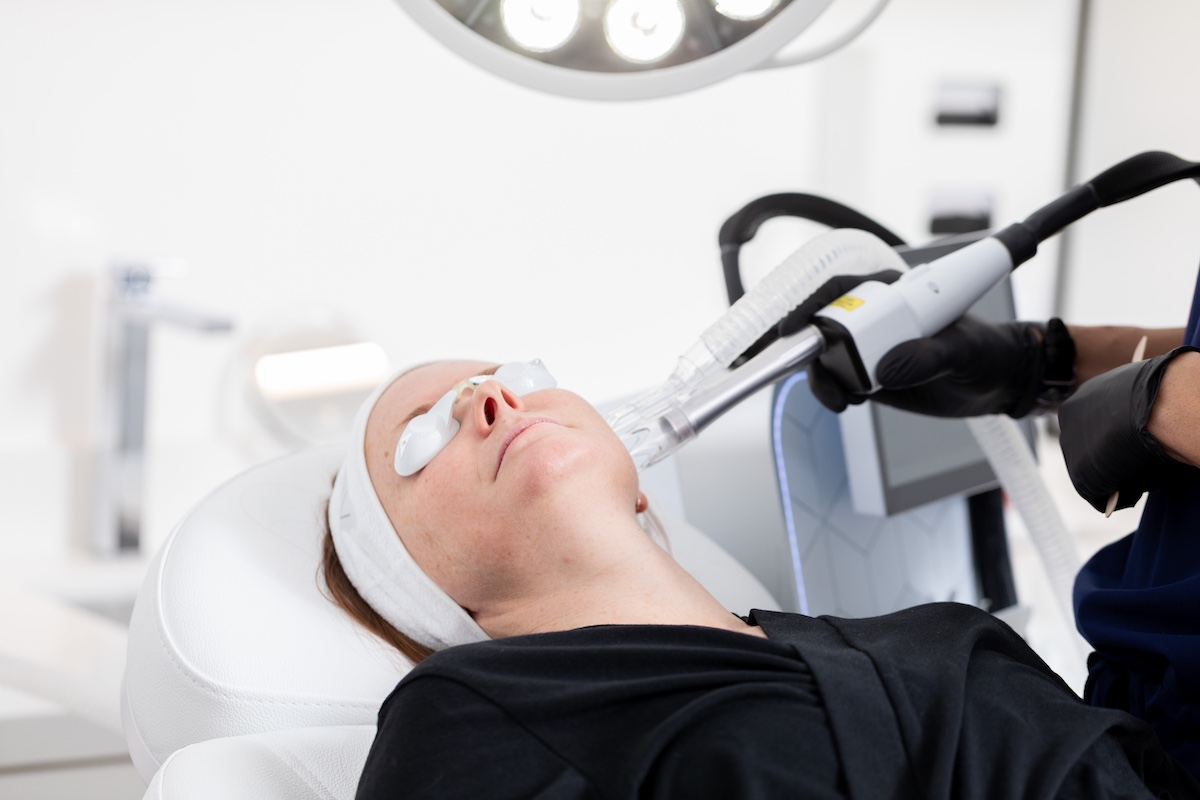
One of the newest laser skin treatments, AuraLux developed by Acclaro Medical, runs on CoolPulse cold fiber technology, at a 2910nm wavelength. That number matters more than it sounds like it should. At that wavelength, the laser is absorbed primarily by water in the skin cells rather than by pigment. It’s targeting hydration in the tissue, which takes the main unpredictable variable out of the equation for deeper skin tones. The heat side changes too.
CoolPulse delivers about 95% of its energy directly into the target tissue, leaving only around 5% behind as residual heat. Traditional lasers leave far more heat in the surrounding skin, and that leftover heat is exactly what sets off the inflammatory response that leads to dark spots. Less heat left behind means less of a trigger to begin with. There’s also GLIDE, one of AuraLux’s four treatment modes, designed for larger areas like the neck or chest. It uses a randomized pulse pattern to reduce the risk of hyperpigmentation across bigger stretches of skin, instead of a fixed grid that can leave visible patterns of pigment change behind. Put together, this is why AuraLux is cleared and studied across the full Fitzpatrick range, from type I through type VI. It’s FDA cleared, and that range of skin tones was part of the design from day one.
What this actually means for you
None of this means every treatment looks identical on every skin tone, or that results show up the same way for everyone. Skin is individual. A good provider will still ask about your history, your goals, and how your skin has responded to any past treatments before recommending a plan. If you’ve dealt with hyperpigmentation before, from acne, a previous laser, or even sun exposure, mention it. That history should shape your treatment plan. That old answer made sense for the old technology. It doesn’t apply anymore. Some of the most satisfied AuraLux patients are the ones who spent years hearing no from other lasers. If you’re curious whether it’s right for you, skip the extra research and book a consultation instead. A provider can look at your actual skin and tell you what to expect, which is more useful than anything you’ll find online.
This article is for general information and isn’t a substitute for a consultation with a licensed provider, who can evaluate your specific skin and history.